Understanding Directories and Lists in Proptia.
Exploring the Directories Menu in the Administrative Portal
The directories menu is the heart of your administrative portal—it's where all your essential data lives. Learn how to navigate each directory, manage information, and personalize your view to keep your community organized.
Step 1: Click Directories at the top of your admin portal. A dropdown appears listing all directory types.
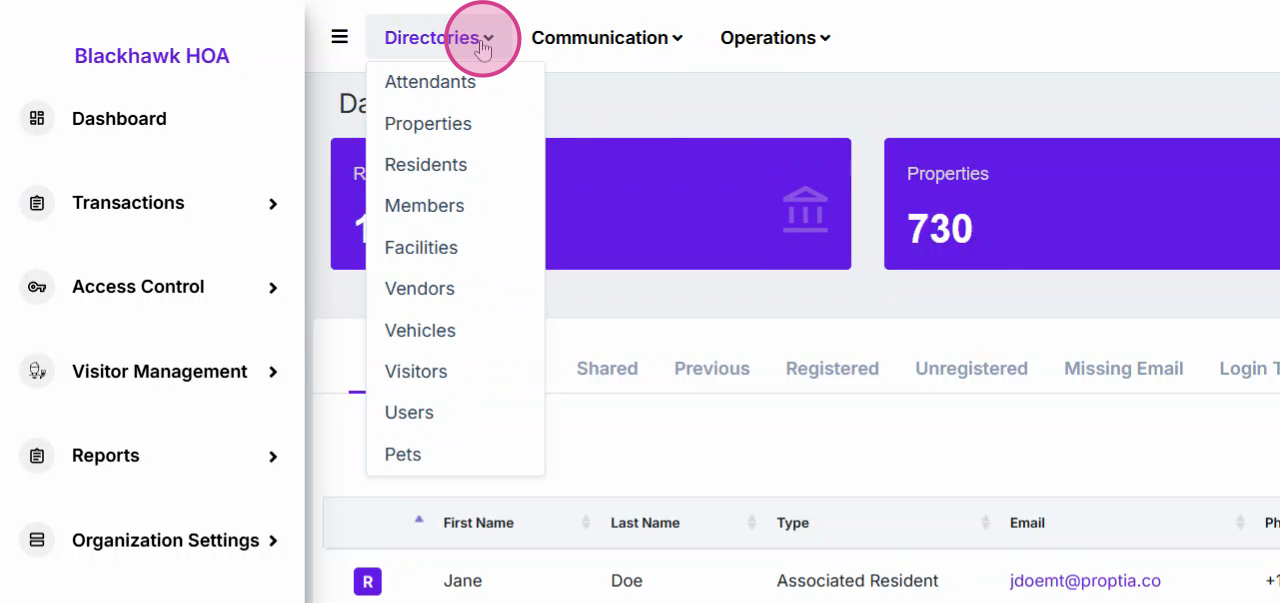
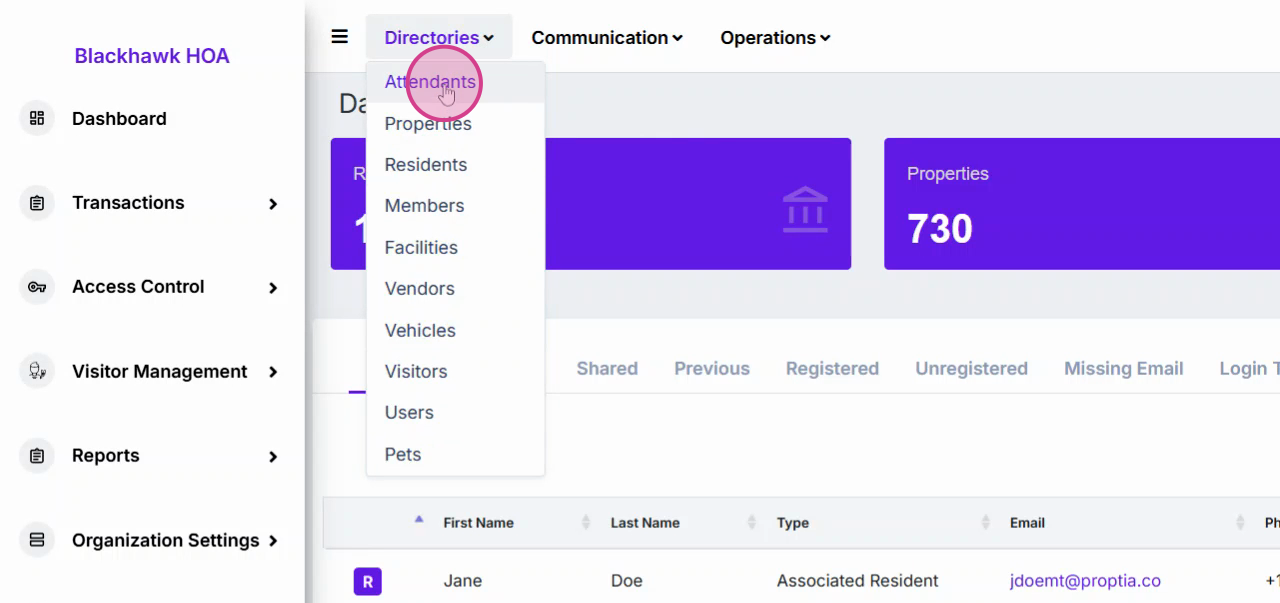
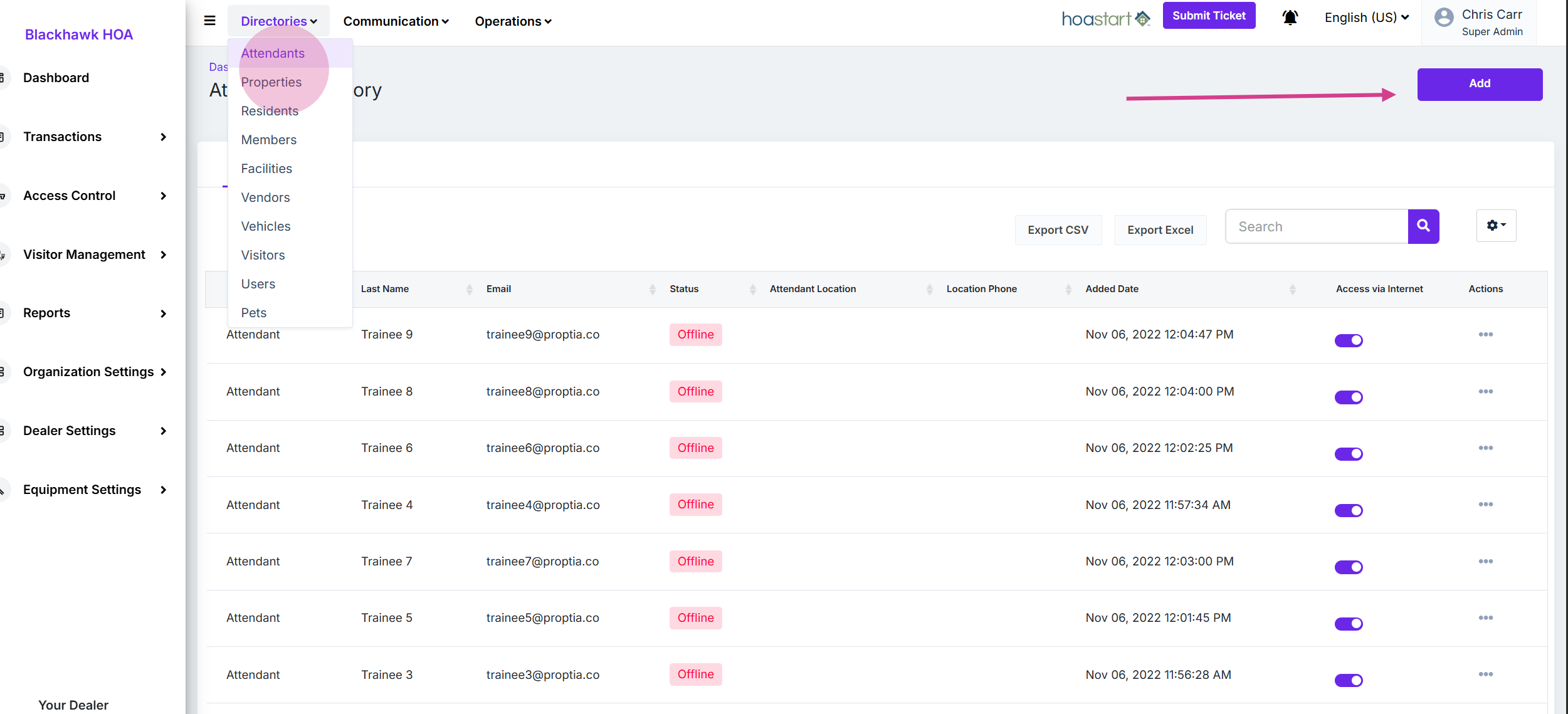
Step 2: Browse through the directories. The first is the Attendance Directory—used for property or visitor management. Here, front desk and gatehouse personnel are listed with columns for first name, last name, email, and online/offline status.
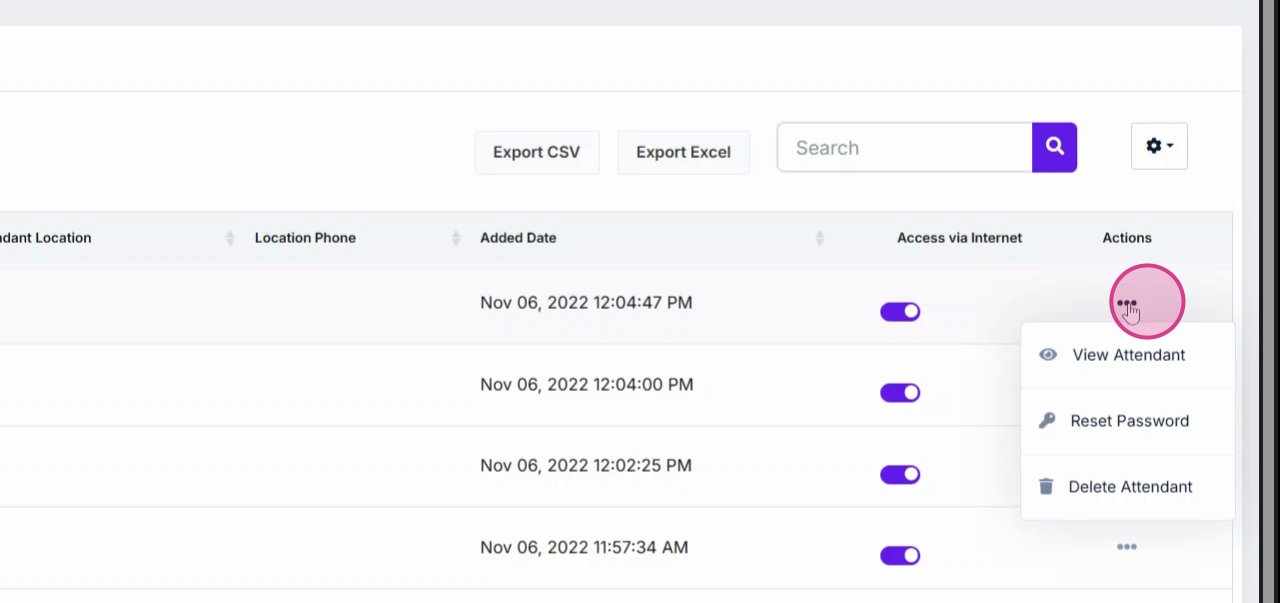
Step 3: Use the settings in each row to view attendant details, reset passwords, or delete records.
Step 4: Add new attendants or records by clicking the Add button at the top right.
Step 5: Open the Properties directory to see all properties managed by your organization.
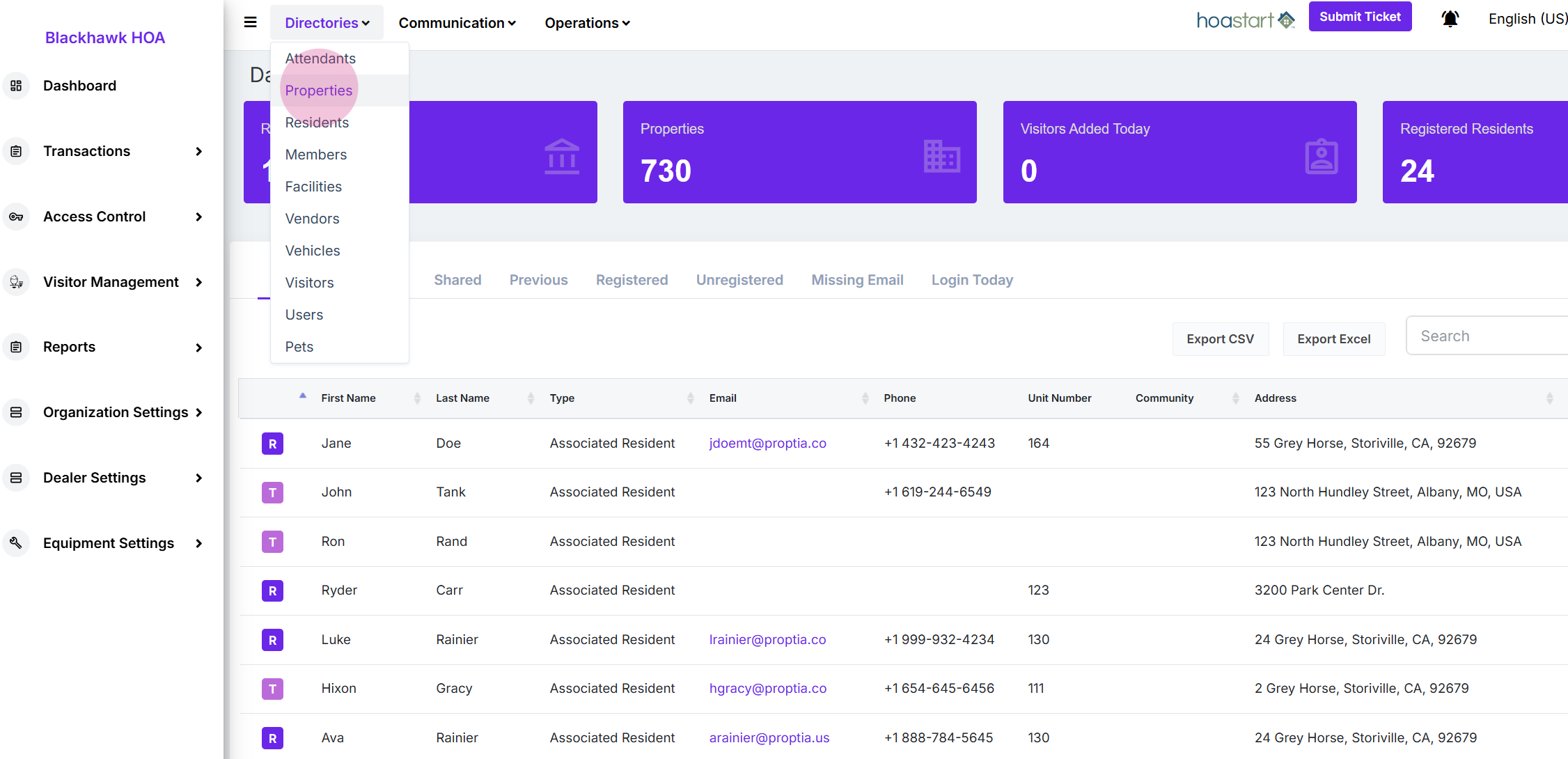
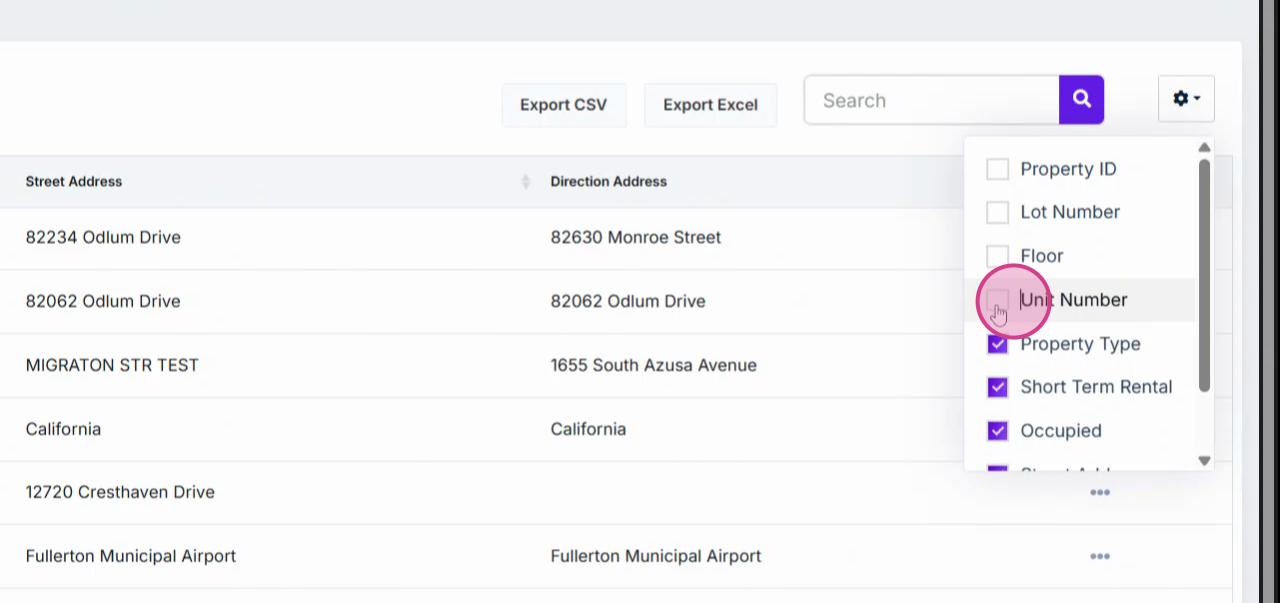
Step 6: Customize which columns display. Remove columns that aren't useful, like Unit Number, to simplify your view.
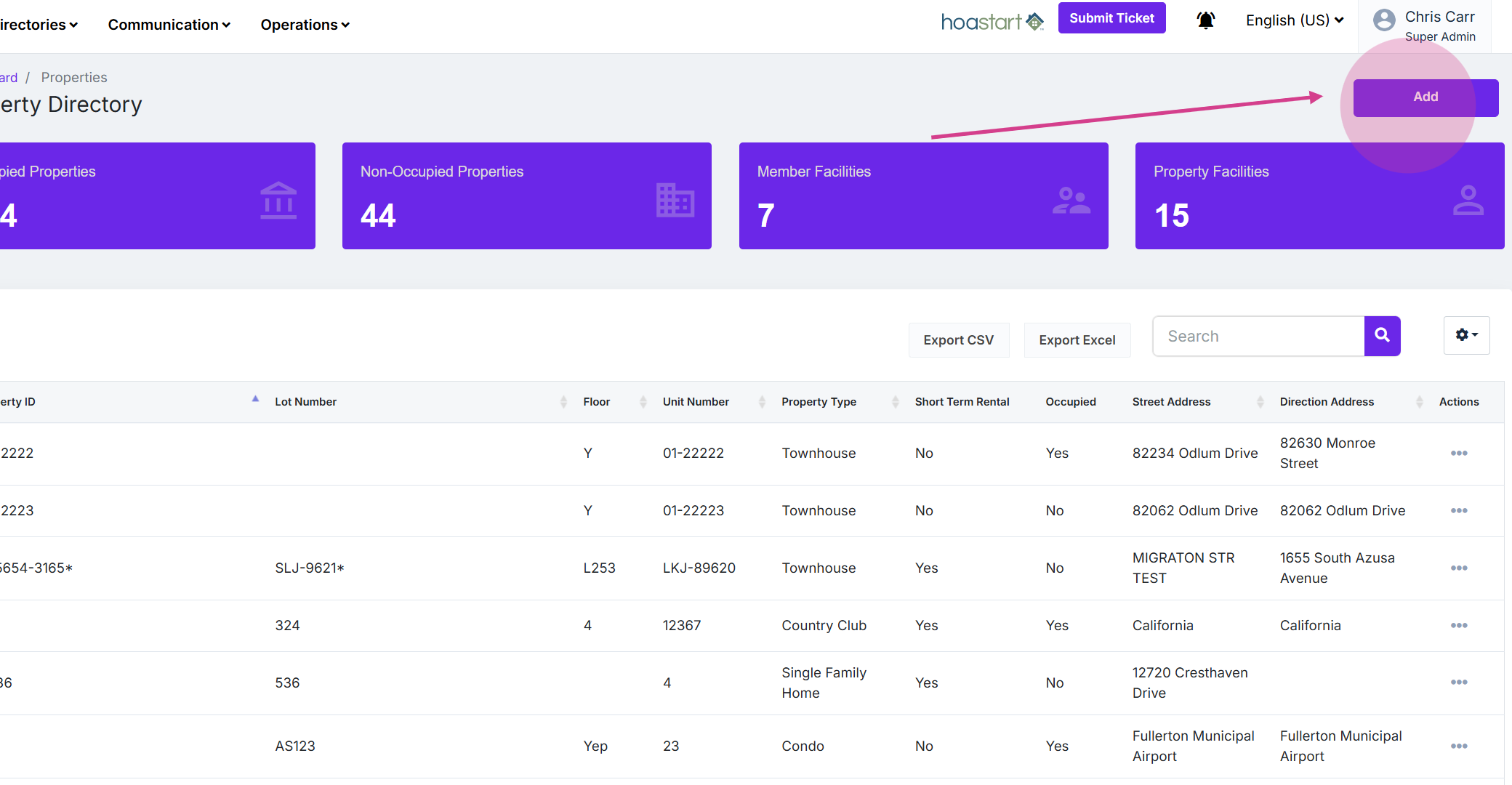
Step 7: Understand property widgets such as "Occupied Properties" and "Non-occupied Properties". Use the Add button for new properties as your community grows.
Step 8: Move to the Resident Directory. This lists all residents, tenants, primary owners, and associated residents in the system.
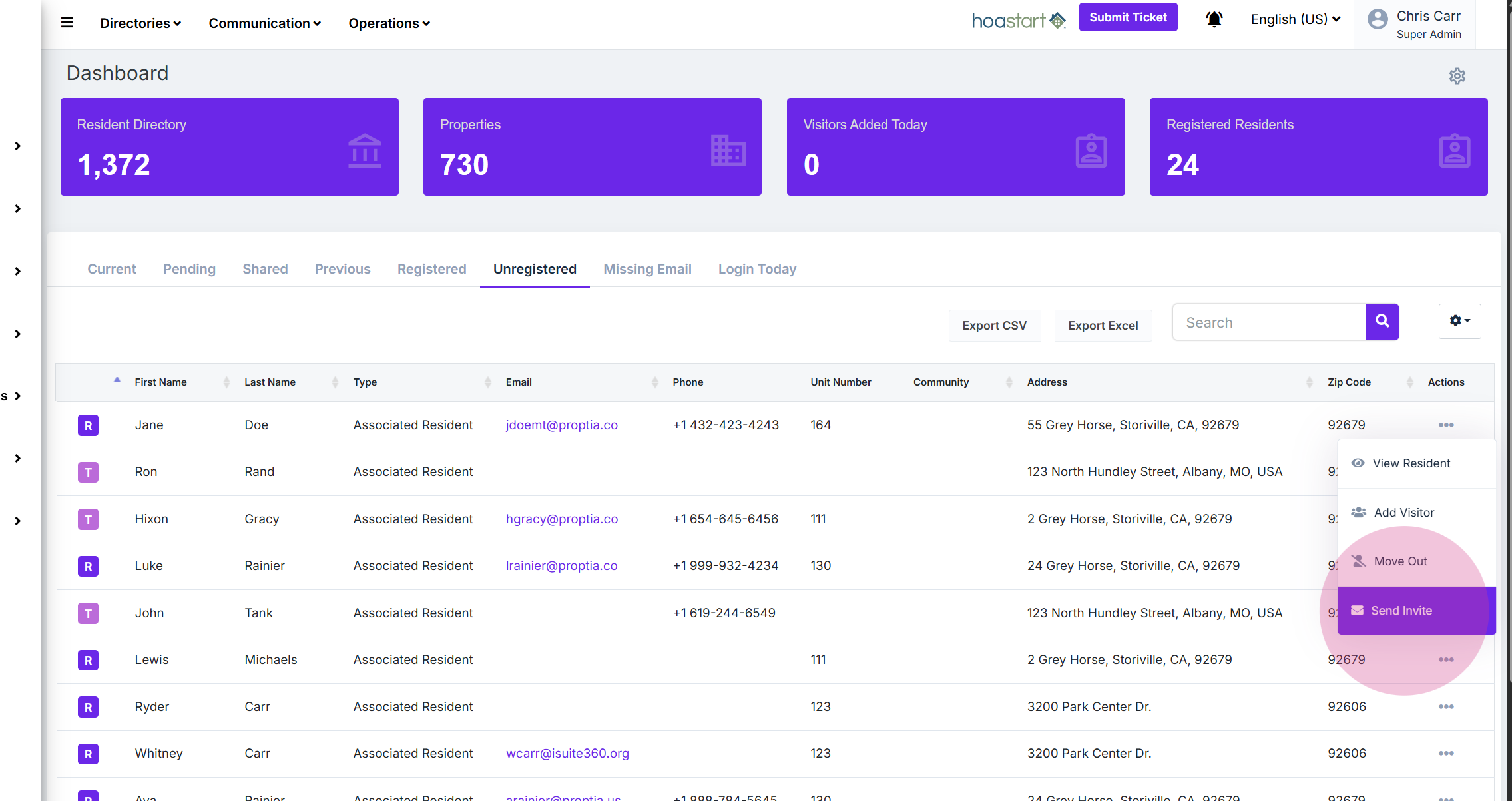
Step 9: Use badge filters to quickly see residents by role, and use segmentation like "Pending", "Shared Residents", "Previous Residents", "Unregistered", "No Email", and "Logged in Today" to manage onboarding and communications.
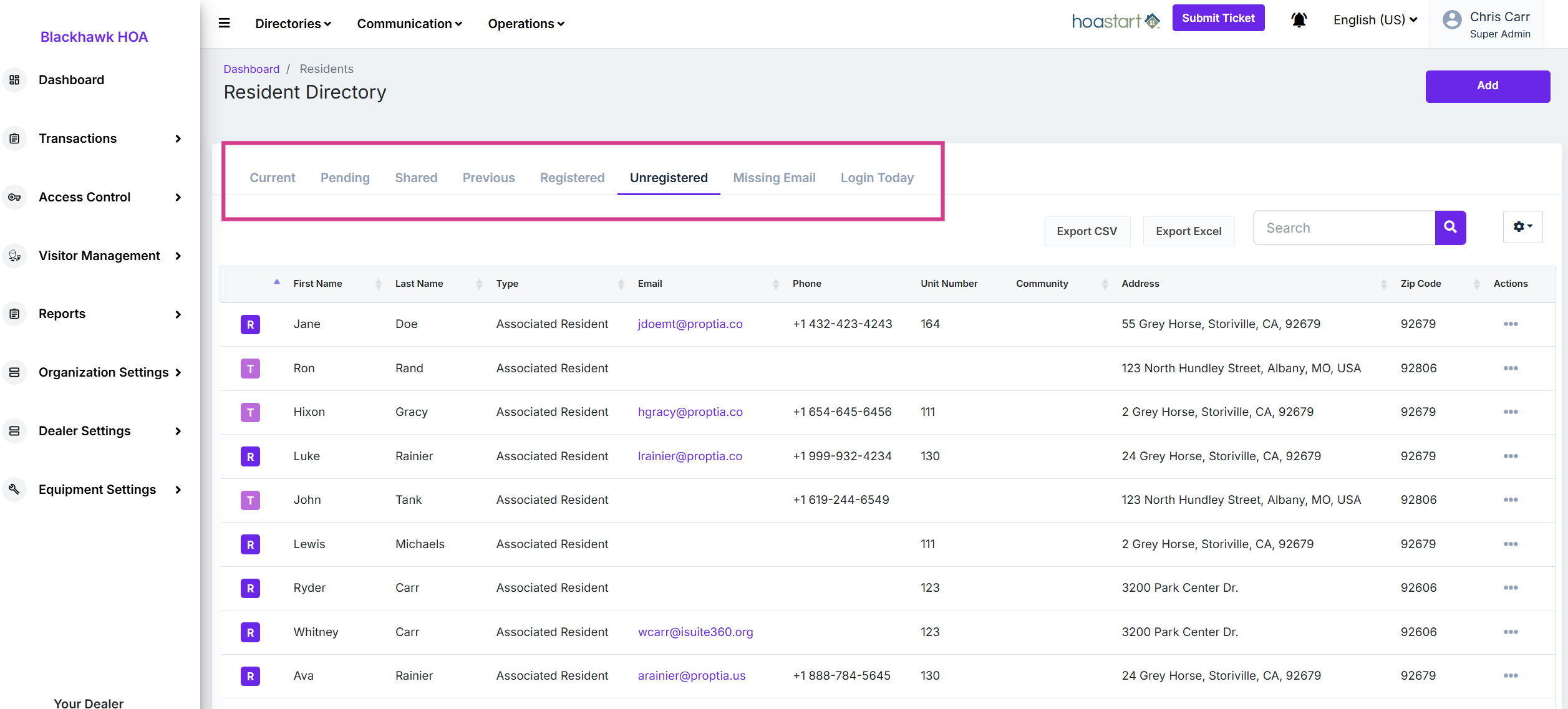
Step 10: To help residents who haven't completed registration, find them in the list, click the ellipsis next to their name, and resend the registration invite
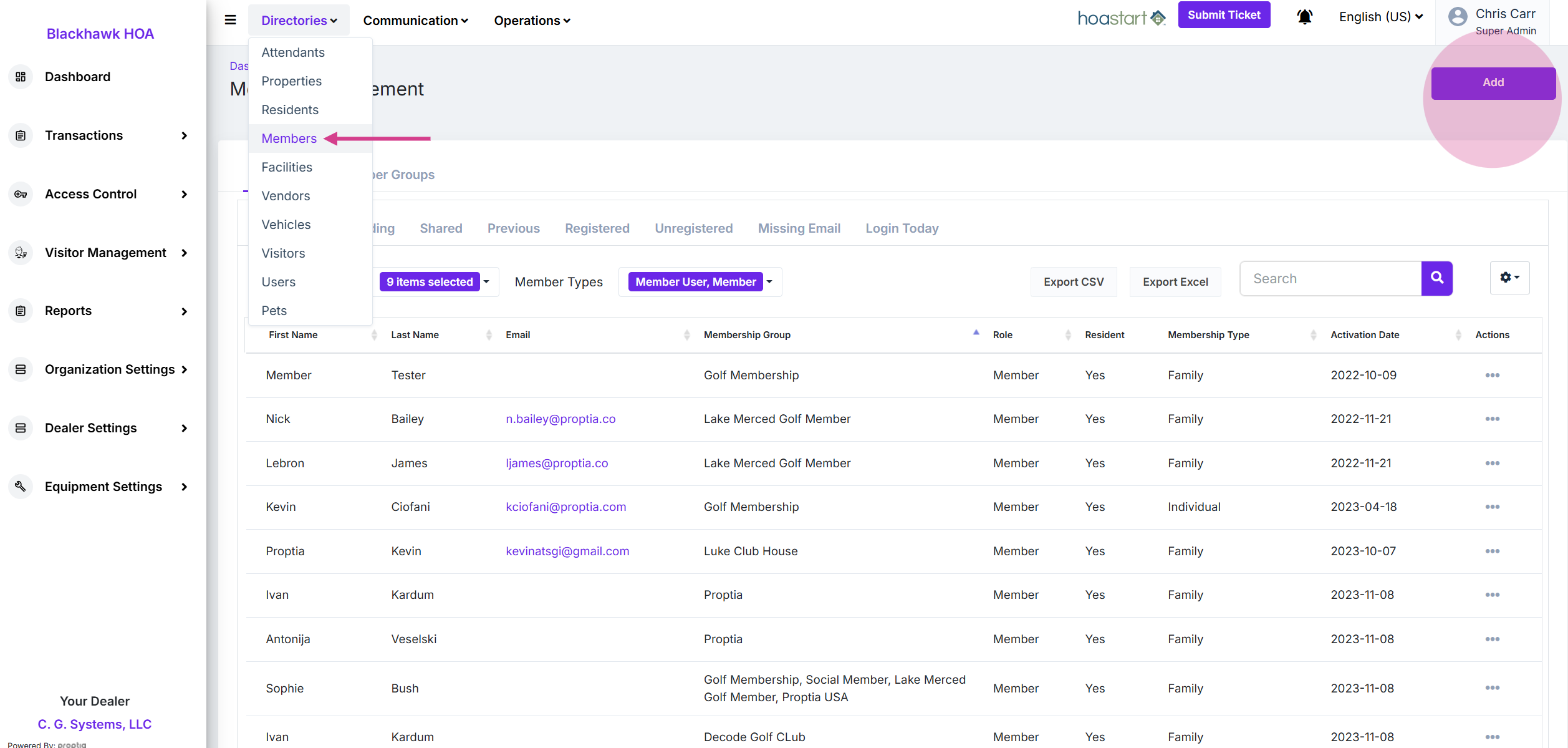
Step 11: In the Members directory, manage people who are members of clubs or facilities but might not be residents. Assign member types and groups here. To add a New Member, select the "Add" button on the top right. For example a new Country Club member.
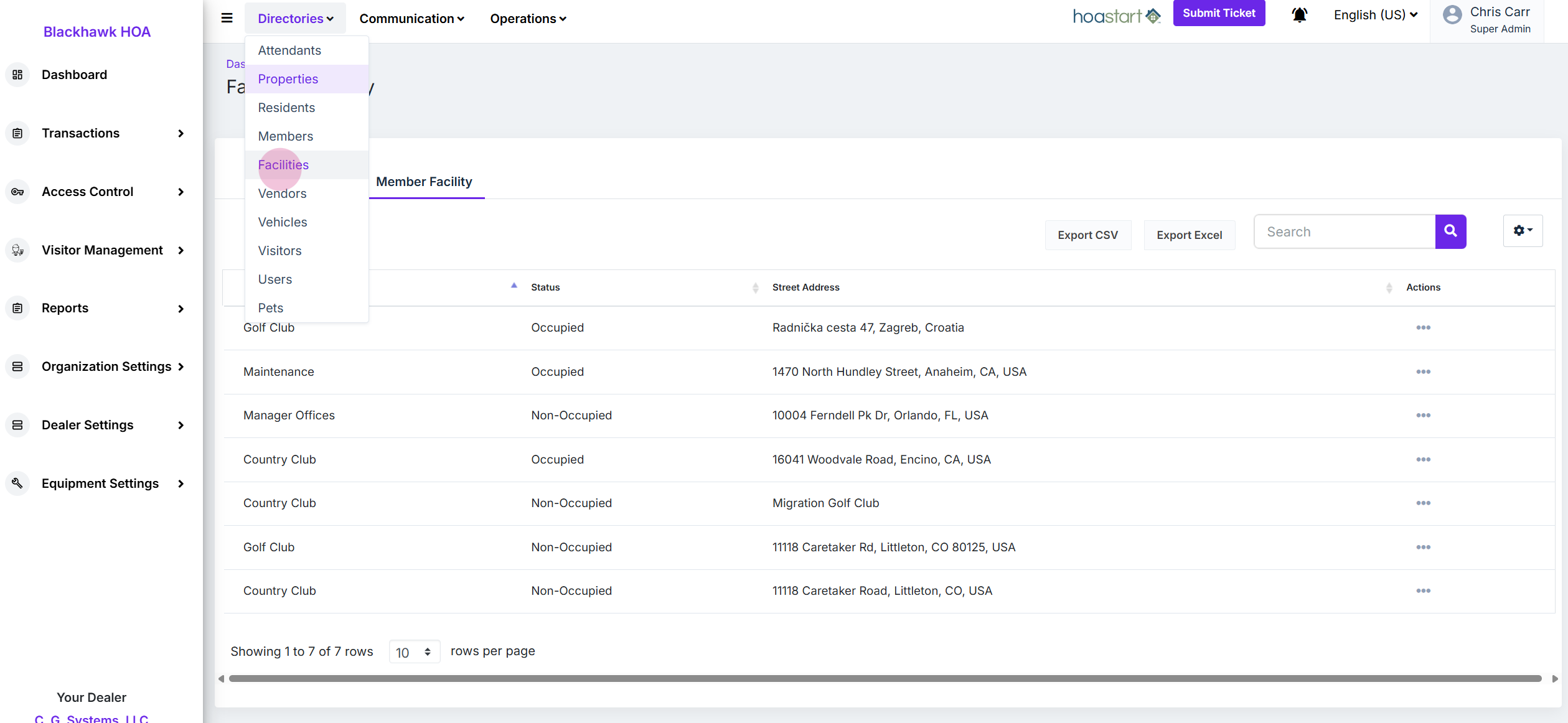
Step 12: In the Facilities directory, catalog non-residential locations like the office, pro shop, or restaurants.
Step 13: Use the Vendors directory to track community vendors, see their assigned properties, and manage their employees (vendor users). To add a new Vendor select the "Add" button on the top right. 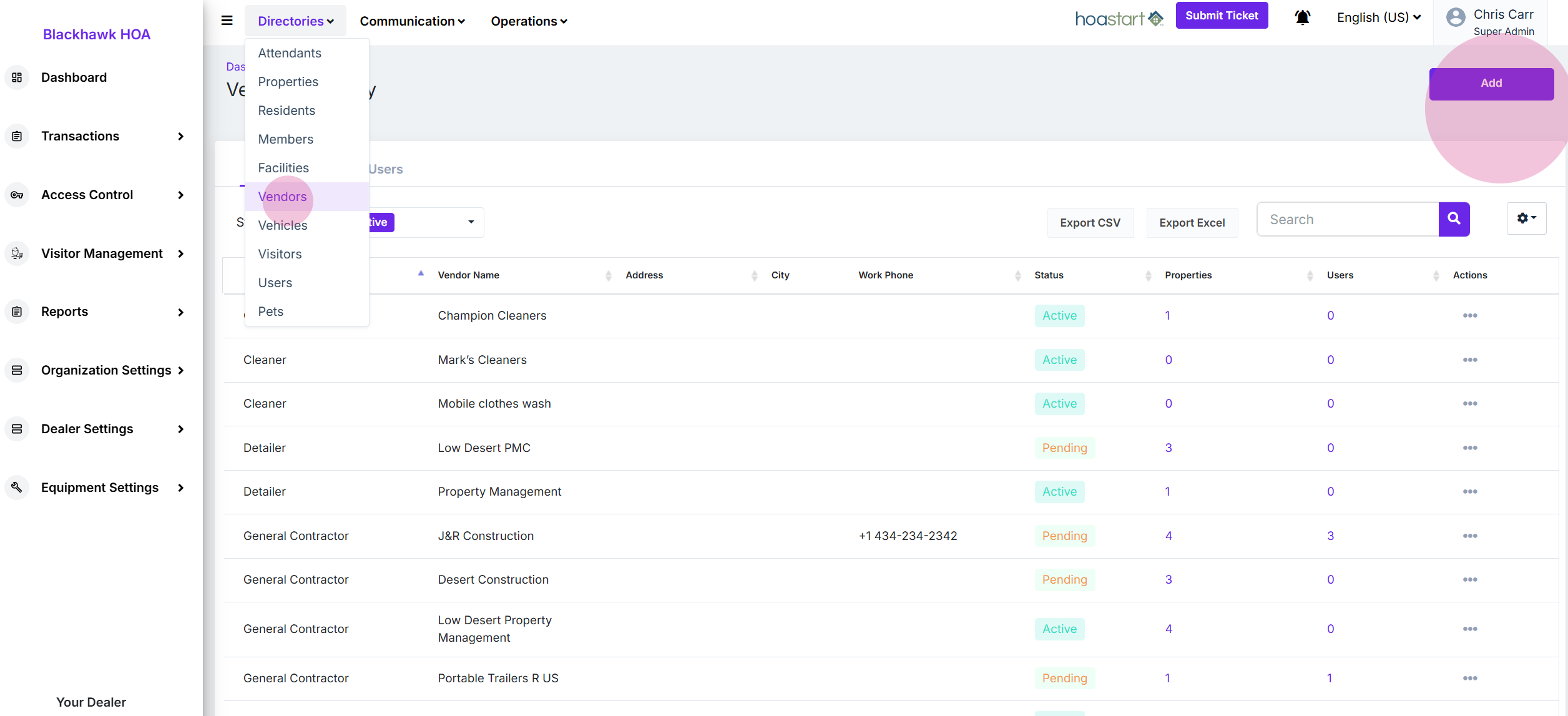
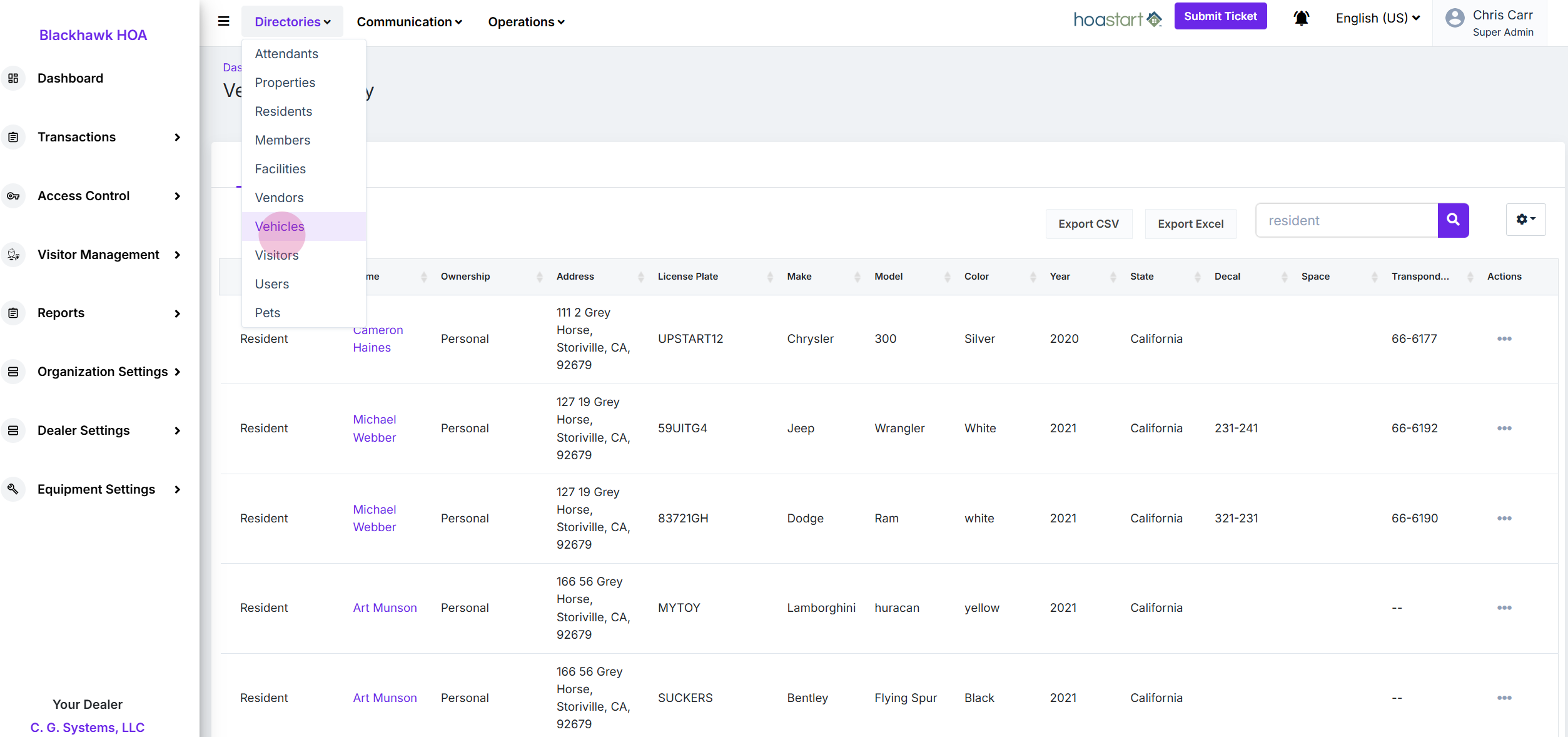
Step 14: In the Master Vehicle Directory, search and manage all staff and resident vehicles—track their details, including access control if applicable.
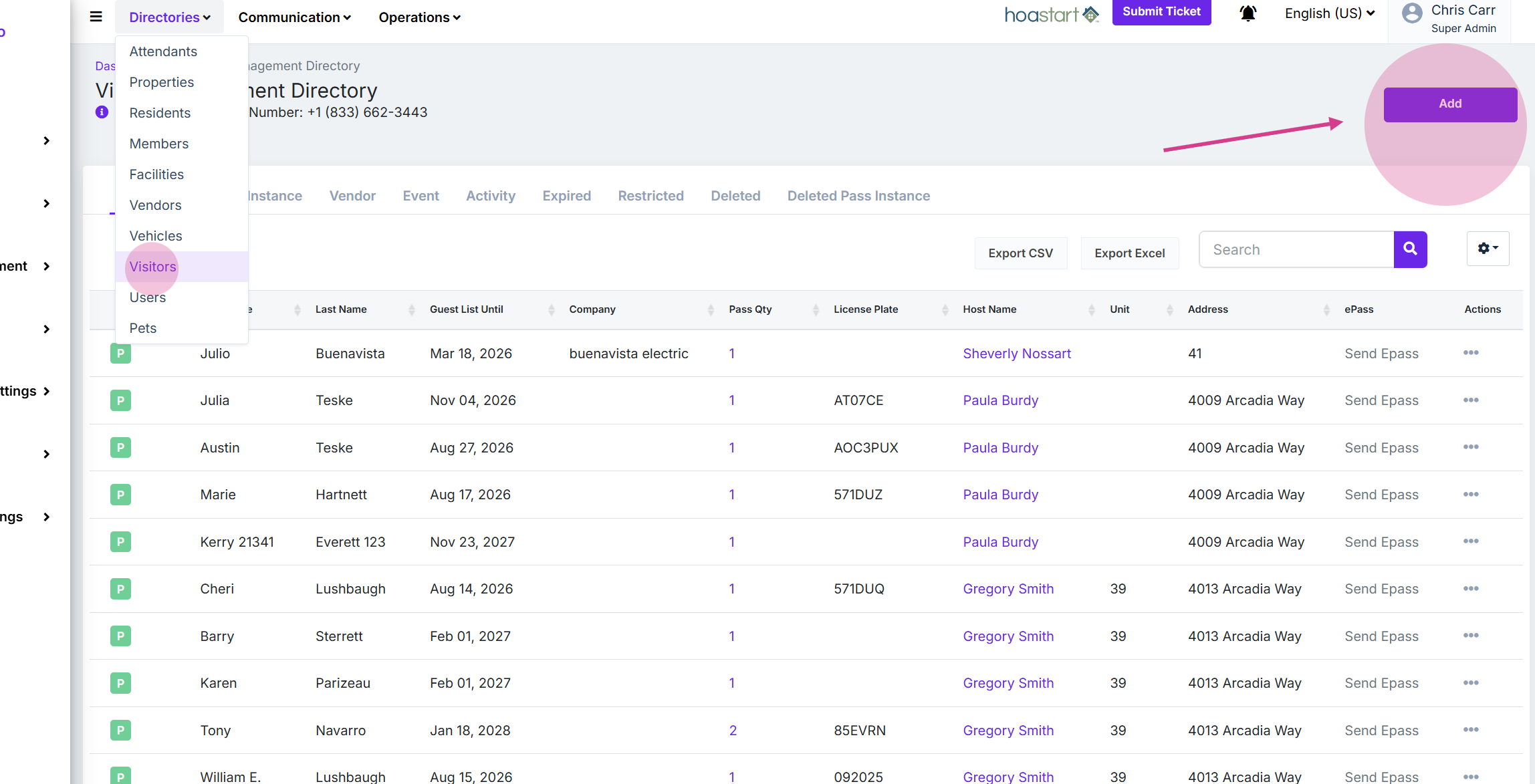
Step 15: The Master Visitor Directory lets you track visitor activity, including visitor history, expired, and restricted visitors, with navigation tabs at the top. To Add a New Visitor select "Add" button on the top right.
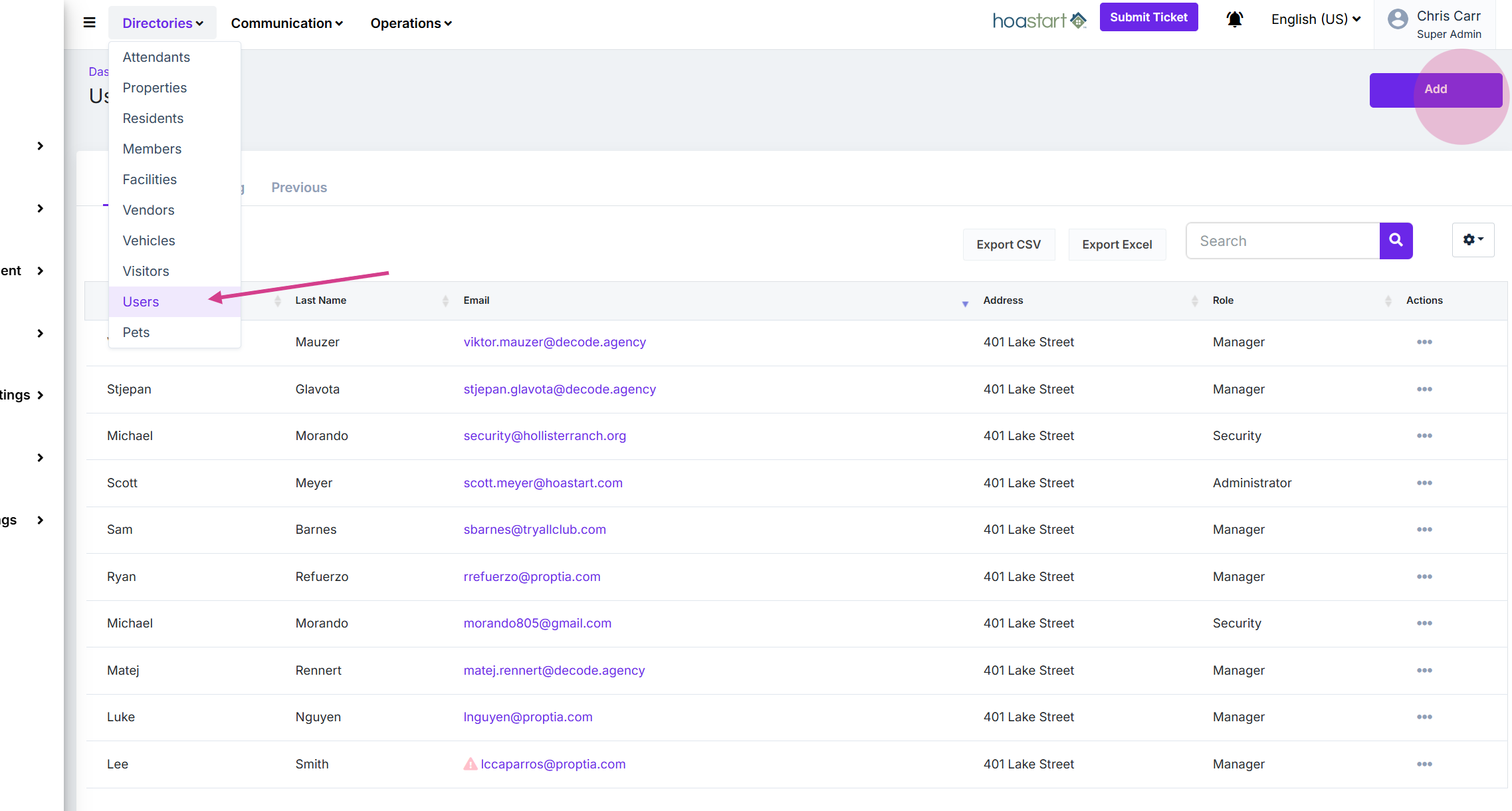
Step 16: The Users directory is for staff and administrators. Assign roles and customize permissions under organization settings.
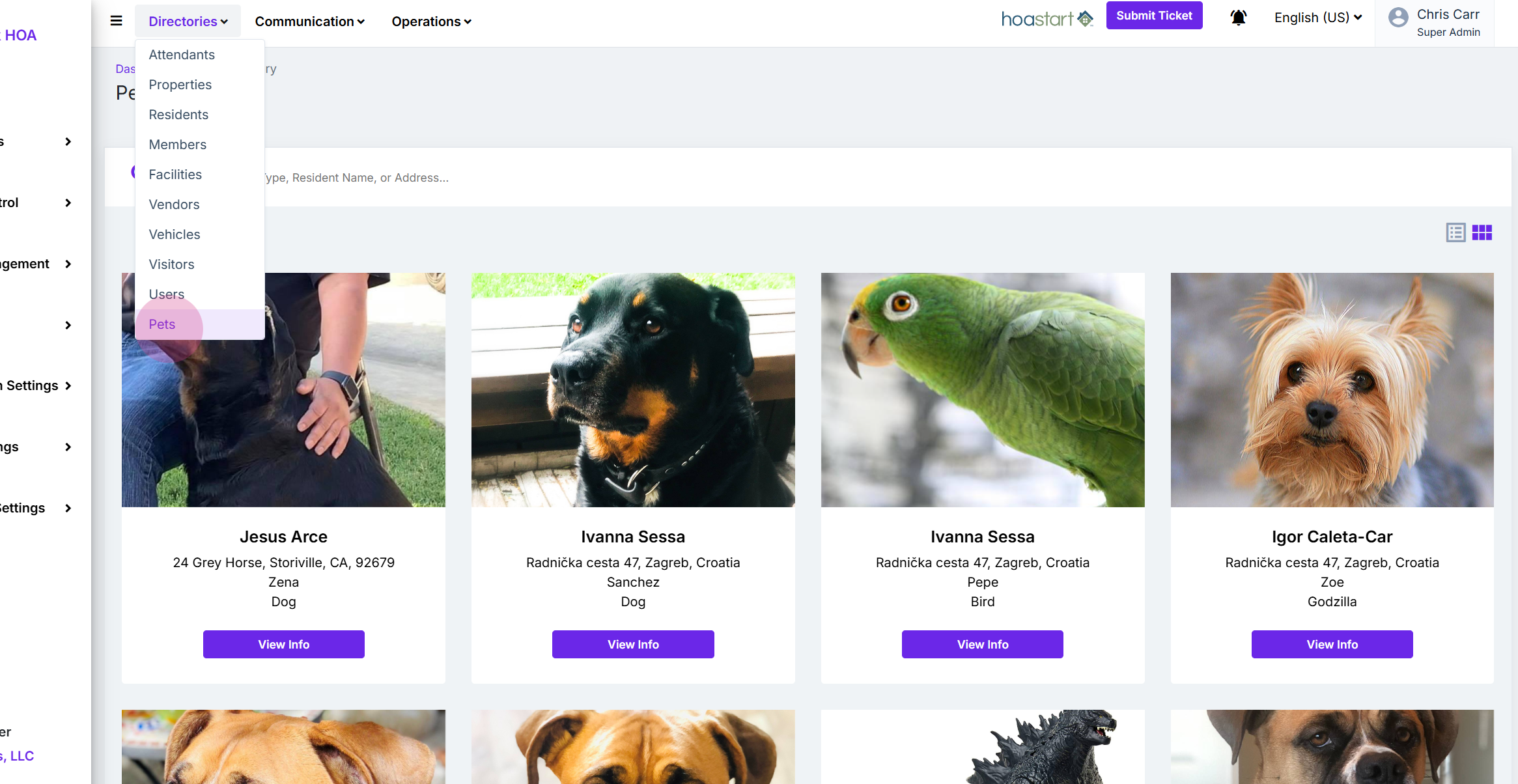
Step 17: Under Pets, residents' furry friends are tracked. You can view and change pet information, including owner contact details and notes.
The directories dropdown gives you access to the main lists that keep your organization running—attendants, residents, properties, facilities, vehicles, visitors, staff, vendors, and even pets. You can add, modify, or delete data as needed, all depending on your permissions. Some directories may not appear or be relevant if certain modules aren't activated (for example, the attendant directory if you don’t use visitor management).
Stay organized and efficient by familiarizing yourself with these directories—they're the backbone of your administrative tasks.
Frequently Asked Questions
What is the Directories menu in Proptia?
The Directories menu is where all core data in your system is stored and managed. This includes residents, properties, visitors, staff, vendors, vehicles, and more. Think of it as the central database for your community.
How do I access the Directories menu?
Go to the top navigation bar in the admin portal and click Directories. This will open a dropdown with all available data categories.
What types of data are stored in Directories?
Directories organize your system into specific categories, including:
Attendants (gate or front desk staff)
Properties
Residents and tenants
Members (club or amenity users)
Facilities
Vendors and vendor users
Vehicles
Visitors
System users (staff/admins)
Pets
Can I add new records in a directory?
Yes. Most directories allow you to add new records using the Add button in the top right corner. Your ability to add or edit data depends on your permissions.
What is the Attendants directory used for?
The Attendants directory is used to manage gatehouse or front desk staff. You can add attendants, update their information, reset passwords, and monitor their online or offline status.
What is the difference between Residents and Members?
Residents include homeowners, tenants, and occupants who live in the community.
Members are typically associated with clubs or amenities (like a golf club or clubhouse) and may or may not live in the community.
What does “Pending” mean in the Resident directory?
“Pending” refers to residents who have been added to the system but have not yet moved in or completed registration. This is useful for onboarding new residents in advance.
How do I resend a resident registration invite?
Go to the Residents directory
Find the resident
Click the ellipsis (three dots) next to their name
Open their profile and resend the invite
What are Shared Residents?
Shared residents are individuals who exist across multiple Proptia organizations. This is useful when communities share access points, such as a central guardhouse.
Can I customize what columns I see in a directory?
Yes. You can remove or adjust visible columns to simplify your view. Your preferences will automatically save for future sessions.
What is the Properties directory used for?
The Properties directory contains all units or addresses in your community. Most properties are added during implementation, but you can add new ones if your community is expanding.
What are Vendors and Vendor Users?
Vendors are service providers (e.g., landscaping, maintenance companies)
Vendor Users are employees of those vendors who interact with your community
You can assign vendors to specific properties they service.
What is the Vehicle directory used for?
The Vehicle directory stores all vehicle records, including resident and staff vehicles. You can view details like make, model, color, license plate, and RFID/transponder information if applicable.
What is the Visitor directory used for?
The Visitor directory shows all visitor activity, including:
Active visitors
Visitor history
Expired passes
Restricted visitors
This is especially important for gatehouse and access control operations.
What are Users in the Directories menu?
Users are staff members such as property managers or administrators. Each user is assigned a role that determines what they can see and do in the system.
Can I control what users have access to?
Yes. Access is controlled through roles and permissions, which can be customized in Organization Settings.
What is the Pets directory used for?
The Pets directory allows residents to register their pets. You can view details such as pet type, owner information, and any notes provided.
Why don’t I see certain directories?
Some directories only appear if specific modules are enabled. For example, if your community does not use gatehouse visitor management, the Attendants directory may not be relevant.
Can I edit or delete records in directories?
Yes, depending on your permissions. Most directories allow you to:
Add new records
Edit existing data
Delete records if necessary